
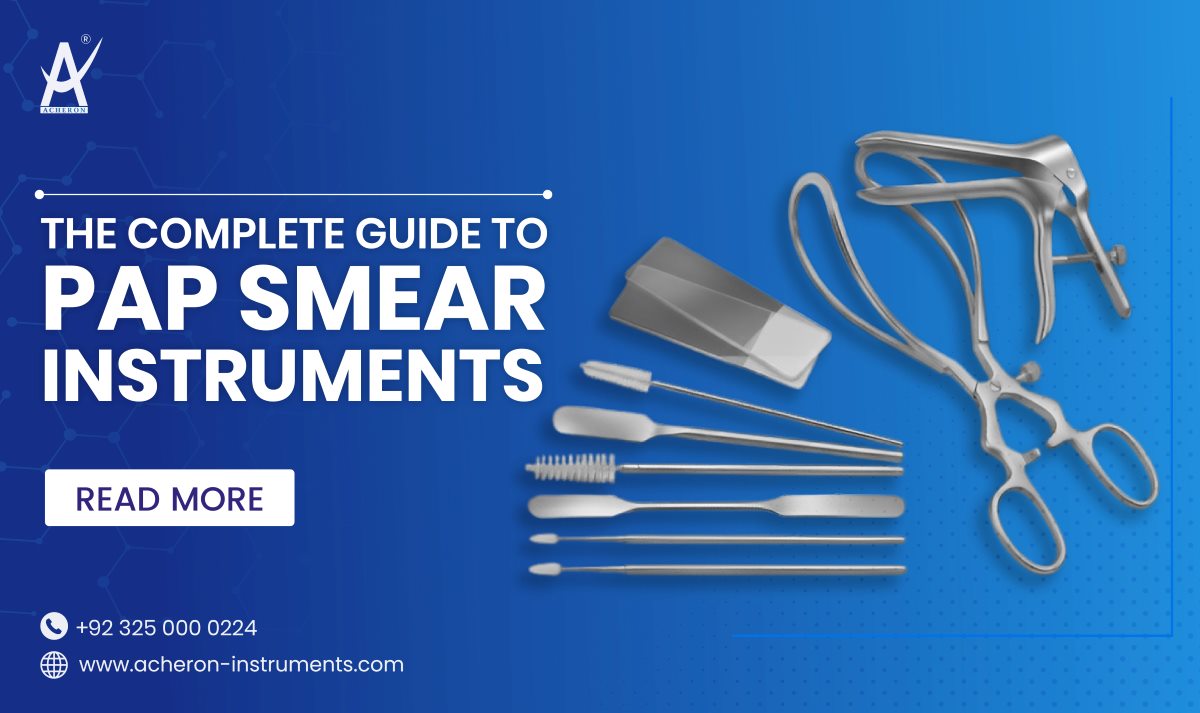
A Pap smear, also called a Pap test, is a common cervical cancer screening procedure that collects cells from the cervix. These cells are then examined in a laboratory to check for abnormal changes. Although the test itself is usually quick, many people feel nervous because they do not know which instruments are used during a Pap smear. Understanding the purpose of each tool can make the experience feel less intimidating and help patients feel more prepared for their appointment. Furthermore, this complete guide explains the main instruments used in a Pap smear, why each is needed, how it is used, and what patients can expect during the procedure.
If you’re looking to understand the essential tools used in women’s health procedures, our detailed guide on the gynecology instrument set covers everything you need to know.
What Is a Pap Smear?
A Pap smear, or Papanicolaou test, is a diagnostic screening procedure performed to collect exfoliated cells from the external opening of the cervix and the endocervical canal. The collected cellular material is then examined under a microscope to identify abnormal cellular development.
-
Detect precancerous and cancerous processes in the endocervical canal.
-
Identify cellular abnormalities caused by human papillomavirus (HPV) infections.
-
Facilitate early medical intervention to prevent the progression of cervical disease.
The procedure requires exact anatomical visualization and precise tissue sampling. Consequently, the procedure mandates the use of specialized gynecological tools that enable the practitioner to navigate the vaginal canal without causing excessive patient discomfort or compromising the integrity of the collected sample. Moreover, the procedure usually takes only a few minutes and is commonly performed in a doctor’s office, a gynecology clinic, a women’s health center, or a primary care setting.
Primary Pap Smear Instruments and Their Functions
The exact instruments used may vary depending on the clinic, provider preference, patient anatomy, and whether the sample is being collected for conventional cytology, liquid-based cytology, HPV testing, or co-testing. However, most Pap smear procedures involve several common tools.
Examination Table
The examination table is the clinical table on which the patient lies during the Pap smear. It is designed to support proper body positioning and give the healthcare provider safe access to the cervix.
Functions of the examination table include:
-
Supporting the patient in the proper position for the procedure.
-
Providing a stable and adjustable surface for comfort and safety.
-
Allowing the use of attachments such as footrests or stirrups.
-
Helping the provider examine with better visibility and control.
Footrests or Stirrups
Footrests, commonly called stirrups, are adjustable supports attached to the examination table. They hold the patient’s feet and legs in position during the pelvic exam.
Functions of footrests or stirrups include:
-
Maintaining proper leg positioning throughout the examination.
-
Stabilizing the lower limbs so the provider can access the cervix safely.
-
Helping reduce unnecessary movement during sample collection.
-
Improving patient comfort when adjusted correctly.
Examination Gloves
Medical gloves are worn by the healthcare provider during the Pap smear to maintain hygiene and reduce the risk of infection.
Functions of examination gloves include:
-
Protecting both the patient and provider from contamination.
-
Maintaining a clean clinical environment.
-
Allowing safe handling of instruments and sample collection materials.
-
Supporting infection-control standards during the procedure.
Light Source or Examination Lamp
A light source or examination lamp is used to illuminate the vaginal canal and cervix during the Pap smear.
Functions of the light source include:
-
Providing bright, focused light for a clear view.
-
Helping the provider accurately locate the cervix and cervical opening.
-
Reducing the risk of collection errors due to poor visibility.
-
Supporting a faster and more accurate examination.
Vaginal Speculum
The vaginal speculum is one of the most important instruments used during a Pap smear. It is gently inserted into the vagina and opened slightly to separate the vaginal walls so the cervix can be seen.
Functions of the vaginal speculum include:
-
Opening the vaginal walls to expose the cervix.
-
Creating a clear pathway for cervical sampling tools.
-
Allowing the provider to view the cervix directly.
-
Holding the vaginal walls apart so the provider can collect the sample accurately.
Speculums may be made of plastic or metal. Plastic speculums are usually disposable, whereas metal speculums are sterilized and reused in accordance with medical safety standards. The following are the most common types of speculums used in a Pap smear.
Cervical Spatula
A cervical spatula, such as an Ayre’s spatula or Aylesbury spatula, is a flat sampling instrument used to collect cells from the outer surface of the cervix, known as the ectocervix.
Functions of the cervical spatula include:
- Collecting cells from the ectocervix.
- Rotating around the cervical opening to gather an adequate sample.
- Conforming to the shape of the cervix for better cell collection.
- Transferring collected cells onto a glass slide or into a liquid-based collection vial.
The spatula is usually rotated gently against the cervix. Some patients may feel mild pressure or a brief scraping sensation.
Cytobrush or Endocervical Brush
A cytobrush, also called an endocervical brush, is a small brush used to collect cells from the cervical canal, known as the endocervix.
Functions of the cytobrush include:
-
Collecting cells from inside the cervical canal.
-
Helping sample the transformation zone, where abnormal cervical changes often develop.
-
Improving the accuracy of cervical cell collection.
-
Providing additional cellular material for laboratory examination.
The cytobrush is usually inserted only slightly into the cervical opening and gently rotated.
Cervical Broom
A cervical broom, sometimes called a cytobroom, is a single-use collection device with soft, flexible plastic bristles. It is designed to collect cells from both the outer cervix and the cervical canal simultaneously.
Functions of the cervical broom include:
-
Collecting ectocervical and endocervical cells simultaneously.
-
Using longer central bristles to reach the cervical canal.
-
Using shorter outer bristles to collect cells from the cervical surface.
-
Streamlining the Pap smear process by reducing the need for separate collection tools.
Cervical brooms are commonly used in liquid-based Pap testing.
Cotton Swabs or Gauze
Cotton swabs or gauze may be used during the Pap smear to clear the cervix before sample collection gently.
Functions of cotton swabs or gauze include:
-
Removing excess mucus or discharge from the cervix.
-
Improving visibility before cell collection.
-
Helping maintain a clean field during the procedure.
-
Reducing the chance that mucus or fluid will interfere with sample quality.
These materials are not always required and are used only when needed.
Glass Slide or Collection Vial
After cervical cells are collected, they must be placed in an appropriate container for laboratory testing. The type of container depends on whether the clinic uses conventional Pap smear testing or liquid-based cytology.
Functions of glass slides or collection vials include:
-
Receiving the collected cervical cell sample.
-
Preserving the sample until it reaches the laboratory.
-
Supporting microscopic examination or liquid-based cytology processing.
-
Helping ensure the sample remains suitable for accurate analysis.
In a conventional Pap smear, cells are spread onto a glass slide. In liquid-based testing, the collection device is rinsed or placed into a vial containing preservative fluid.
Fixative Spray or Fixative Solution
Fixative spray or solution is used when cervical cells are placed on a glass slide for a conventional Pap smear.
Functions of fixative include:
-
Preventing the cervical cells from drying out.
-
Preserving the shape and structure of the cells.
-
Reducing cellular distortion before laboratory examination.
-
Helping maintain sample quality for accurate results.
Fixative must be applied quickly after the sample is placed on the slide.
Labelling Materials
Proper labelling is essential after sample collection. Labels are attached to the slide or vial and usually include patient identification details and collection information.
Functions of labelling materials include:
-
Matching the sample to the correct patient.
-
Providing the laboratory with important testing information.
-
Reducing the risk of specimen mix-ups.
-
Supporting accurate reporting of Pap smear results.
Where to Find High-Quality Pap Smear Instruments
Acheron Instruments is a trusted name among healthcare professionals seeking dependable surgical and gynecological instruments. We offer a wide range of medical tools for women’s health procedures to achieve optimum results. The following are reasons to select Acheron Instruments for instruments used in Pap smears.
-
Manufactured from premium German stainless steel to ensure rust-free, reliable operation.
-
Certified by ISO, FDA, and CE, meeting the highest international standards for medical devices.
-
Supported by up to a five-year warranty and backed by a dedicated customer support network.
-
Priced cost-effectively to meet budgets without compromising clinical quality.
-
Trusted by more than 500 medical facilities worldwide for consistent product reliability.
What are you waiting for? Contact Acheron Instruments today to upgrade your surgical inventory and secure high-quality instruments.
Conclusion
The instruments used for a Pap smear may seem intimidating at first, but each tool has a specific purpose. The speculum helps the provider see the cervix, while tools such as the cervical spatula, cytobrush, or cervical broom collect cells for testing. Sample vials, glass slides, fixatives, labels, and transport bags help preserve the sample and deliver it to the laboratory. At Acheron Instruments, we offer a range of surgical tools to help perform a Pap smear. Visit the Acheron Instruments website today to review the complete catalogue of medical-grade surgical instruments and secure high-quality tools for your practice.


-1790596974.jpg)