.jpg%20(1).jpeg)
In an emergency department, it is important to deal with situations within seconds to save patients' lives. When a patient is wheeled in with a penetrating chest wound, a blocked airway, or uncontrolled bleeding, there is no time to discover a missing clamp or a blunt pair of scissors. That is why surgical instrument sets for emergency procedures are regarded as some of the most important assets in any hospital, trauma centre, or field medical unit. In this guide, we have explored different surgical instrument sets for emergency procedures, along with the common mistakes that must be avoided.
What Are Emergency Surgical Instrument Sets?
An emergency surgical instrument set is a pre-assembled collection of surgical instruments that assist surgeons in handling urgent or emergency surgical procedures. These sets are usually kept in emergency departments, trauma bays, intensive care units, labour wards, ambulances, and military or disaster-response units. Each set is built around a specific procedure, so a clinician can open one tray and find everything required, arranged in a logical order.
Core Instrument Categories Found in Every Emergency Set
Although each emergency set is designed for its procedure, most are built from the same basic families of instruments. However, a reliable set is defined not by the number of instruments it contains, but by whether the right instruments have been included in the right sizes and in a condition that can be depended upon. The core instrument categories are outlined below.
|
Category |
Common Examples |
|
Cutting & Dissecting |
Scalpel handles, Mayo scissors, Metzenbaum scissors, suture or bandage scissors |
|
Grasping & Holding |
Adson forceps, DeBakey forceps, Allis forceps, Babcock forceps |
|
Clamping & Occluding |
Kelly, Crile, Mosquito and Rochester-Pean hemostats, Kocher forceps, Satinsky clamp |
|
Retracting & Exposing |
Army-Navy, Senn, Weitlaner, Richardson, Deaver, Balfour and Finochietto retractors |
|
Suturing & Closing |
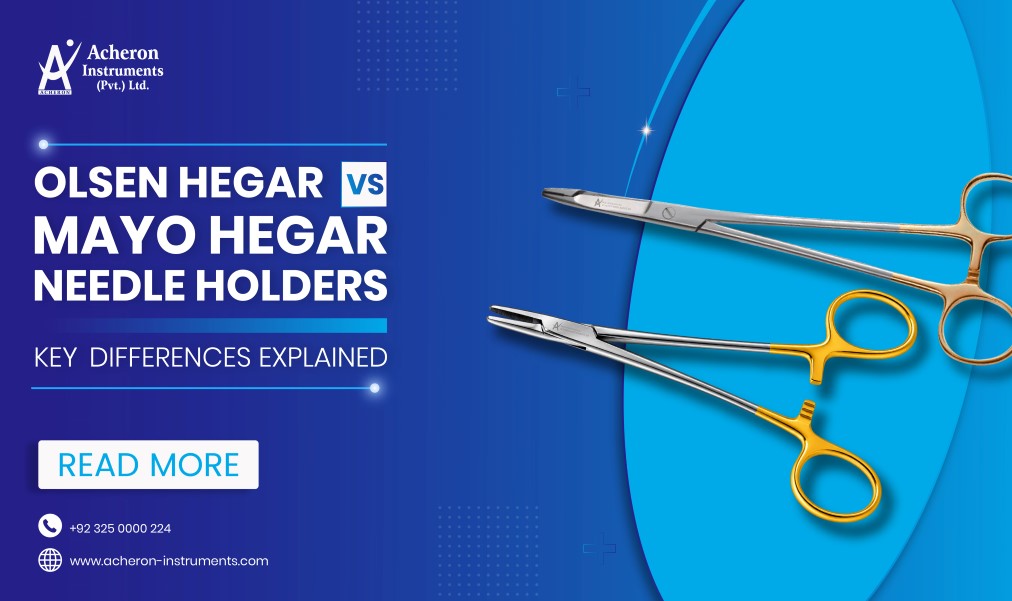
Mayo-Hegar and Webster needle holders, skin staplers, towel clamps |
|
Suction & Accessory |
Yankauer and Frazier suction tips, probes, dilators, trocars |
Types of Emergency Surgical Instrument Sets
1. Emergency Laparotomy Set
The emergency laparotomy set is used when abdominal bleeding or organ injury must be explored and controlled rapidly. It is often considered the backbone of any trauma centre.
Typically included:
-
Scalpel handles No. 3 and No. 4
-
Long and short Mayo and Metzenbaum scissors
-
Assorted Kelly, Crile and long Pean hemostats
-
Babcock, Allis and long DeBakey forceps
-
Balfour self-retaining retractor, Richardson and Deaver retractors
-
Malleable retractors
-
Long needle holders
-
Poole and Yankauer suction tips
-
Towel clamps and sponge-holding forceps
2. Emergency Thoracotomy Set
The emergency thoracotomy set is used to perform procedures in the most critical situations, such as penetrating chest trauma with cardiac arrest.
Typically included:
-
Finochietto rib spreader
-
Heavy curved Mayo scissors and Lebsche sternal knife or Gigli saw
-
Satinsky vascular clamps
-
Long DeBakey tissue forceps
-
Long needle holders
-
Large haemostats and aortic occlusion clamps
-
Suction tips
3. Cricothyrotomy and Emergency Airway Set
If an airway cannot be secured with intubation or bag-valve-mask ventilation, a surgical airway must be created. This set is designed for use under extreme time pressure.
Typically included:
-
Scalpel with No. 10 or No. 11 blade
-
Trousseau tracheal dilator
-
Tracheal hook
-
Small curved hemostats
-
Short retractors
-
Tracheostomy tube holder and tape
4. Chest Tube / Thoracostomy Set
This surgical set is used for the management of pneumothorax, hemothorax and pleural effusions.
Typically included:
- Scalpel handle and blades
- Large curved Kelly or Rochester-Pean forceps
- Mayo scissors
- Needle holder and tissue forceps
- Tube clamps
-
Towel clamps
5. Laceration Repair and Minor Procedure Set
This is the most frequently opened set in almost every emergency department. The minor basic procedure instrument set is used for wound exploration, debridement, and suturing.
Typically included:
-
Scalpel handle No. 3
-
Iris scissors and suture scissors
-
Adson forceps with and without teeth
-
Mosquito hemostats
-
Webster or small Mayo-Hegar needle holder
-
Skin hook
6. Emergency Caesarean-section Set
Obstetric emergencies are among the most critical in medicine, and a dedicated set is kept ready in labour wards. The emergency caesarean-section set comprises fundamental instruments to perform accurate vaginal delivery procedures.
Typically included:
-
Scalpel handles and bandage scissors
-
Doyen bladder retractor
-
Green-Armytage or Pennington haemostatic forceps
-
Kocher and Allis forceps
-
Mayo scissors and needle holders
-
Sponge-holding forceps
-
Sponge Bowl
-
Umbilical cord scissors
-
Wrigley obstetric forceps (in some protocols)
7. Burr Hole / Emergency Craniotomy Set
In cases of acute extradural or subdural hematoma where neurosurgical transfer is delayed, a burr hole may be required to relieve pressure.
Typically included:
-
Hand drill or perforator with burrs
-
Self-retaining scalp retractors (e.g., Adson cerebellar or West)
-
Periosteal elevators
-
Bone rongeurs
-
Dural hooks and fine scissors
-
Bipolar forceps and fine suction tips
8. Emergency Tracheostomy Set
A tracheostomy is often performed urgently in laryngeal trauma, head and neck infections, or prolonged airway compromise. The emergency tracheostomy set is an integral part of every emergency room or in cases where prolonged respiratory support is necessary.
Typically included:
-
Scalpel handles No. 3 and No. 4
-
Trousseau and Laborde tracheal dilators
-
Single and double tracheal (cricoid) hooks
-
Kilner or Langenbeck retractors
-
Mosquito and Kelly hemostats
-
Metzenbaum and suture scissors
-
Adson and DeBakey tissue forceps
-
Needle holder
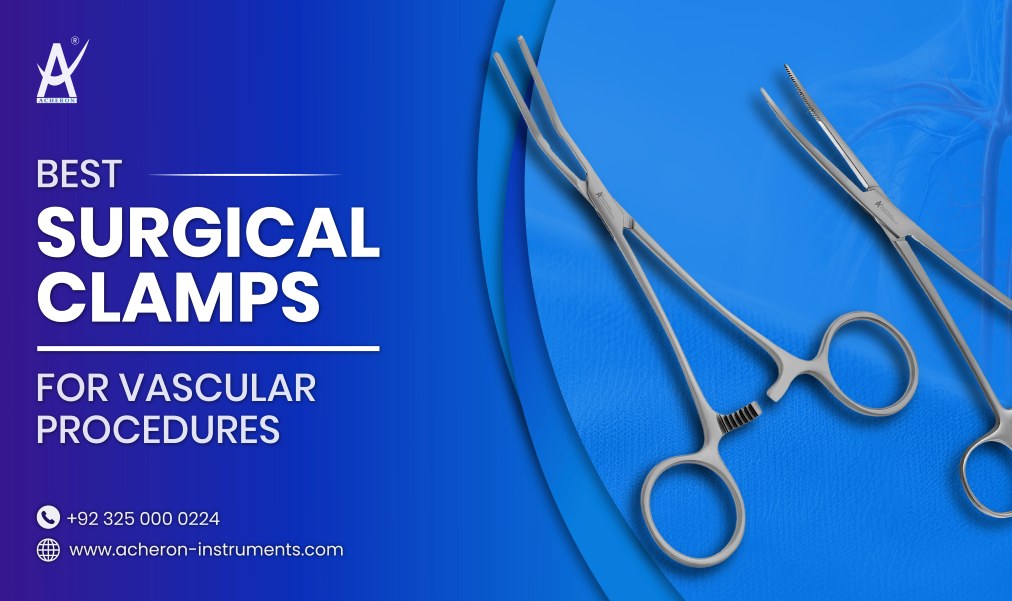
9. Emergency Vascular Surgery Set
Vascular injuries to the limbs, neck, or groin must be controlled before blood loss becomes fatal. The emergency vascular surgery set includes precision instruments related to the vascular system.
Typically included:
-
DeBakey and Satinsky vascular clamps
-
Bulldog clamps (straight and curved)
-
Potts-Smith angled scissors
-
Long and short DeBakey atraumatic forceps
-
Ryder or Castroviejo needle holders
-
Fine mosquito haemostats
-
Weitlaner and Gelpi self-retaining retractors
-
Nerve hook and vessel dilators
10. Emergency Amputation Set
In mass-casualty events, crush injuries, severe blast trauma, or entrapment may require an emergency amputation set to save a life. Heavy instruments capable of cutting through bone are therefore included.
Typically included:
-
Amputation knife and large scalpel handles
-
Gigli saw with handles and/or bone saw
-
Liston bone-cutting forceps
-
Bone rongeurs and bone file (rasp)
-
Bone-holding forceps
-
Large Kelly and Rochester-Pean hemostats
-
Heavy retractors and amputation retractors
-
Large needle holders and Mayo scissors
11. Dilatation and Curettage (D&C) Emergency Set
Heavy bleeding from an incomplete miscarriage or retained products of conception is treated as a gynecological emergency. A Dilatation and Curettage (D&C) set is kept ready so the uterus can be evacuated promptly.
Typically included:
-
Sims or Graves vaginal speculum
-
Auvard weighted speculum
-
Pozzi or Teale tenaculum forceps
-
Uterine sound
-
Hegar uterine dilators (graduated)
-
Sims sharp and blunt uterine curettes
-
Ovum forceps
-
Rampley sponge-holding forceps
12. Emergency Surgical Removal Kit
A dedicated emergency surgical removal kit provides the basic instruments needed for efficient removal of sutures (stitches) from the wound site once it is healed.
Typically included:
-
Scalpel handle No. 3
-
Adson tissue forceps (toothed and non-toothed)
-
Iris scissors and Metzenbaum scissors
-
Mosquito hemostatic forceps (curved and straight)
-
Mayo-Hegar needle holder
-
Senn retractors
-
Towel clips
Common Mistakes That Should Be Avoided
Even experienced facilities can fall into these traps, and they should be avoided.
-
Mixing low-grade and high-grade instruments in the same set
-
Using saline or bleach for soaking
-
Overcrowded trays
-
Skipping lubrication
-
Ignoring clinician feedback
-
Delaying repair or replacement
Why Acheron Instruments Is Trusted for Emergency Sets
At Acheron Instruments, surgical instruments are crafted through a blend of traditional hand-finishing skills and modern manufacturing knowledge. Our instruments are supplied to private hospitals, clinics, and healthcare distributors. When emergency sets are sourced from Acheron Instruments, the following can be expected:
-
Premium-grade stainless steel maintains strength, sharpness, and corrosion resistance through repeated sterilization cycles.
-
Precision craftsmanship is applied to every jaw, serration, ratchet, and cutting edge, with each instrument inspected before dispatch.
-
Comprehensive product ranges are available, including general surgery, cardiovascular and thoracic, neurosurgical, plastic surgery, microsurgical, dental, and veterinary instruments, allowing complete emergency sets to be built from a single source.
-
Custom instrument services are provided so that sets can be configured to the exact preferences of your clinical teams.
-
Etching and identification options are available, making tray management and traceability easier.
You can explore our surgical instrument sets for more options.
Conclusion
In emergency medicine, surgical instrument sets are essential for critical diagnosis and life-saving care. When sets are carefully designed, made from high-quality materials, and maintained with care, clinicians can act quickly and confidently when it matters most. Moreover, if your emergency department, trauma unit, or surgical centre is being equipped or upgraded, Acheron Instruments can be relied upon to provide precision-crafted instruments and fully customized surgical instrument sets for emergency procedures. Get in touch with our team today, and let your next emergency be met with complete readiness.