
When a tooth cannot be saved, a dental professional must perform an extraction to preserve the health of the surrounding tissue and jawbone. This requires major dental tools for removing teeth to ensure precision and minimize tissue trauma. This guide provides a comprehensive overview of the instruments used in dental extractions. It covers the primary categories of tools, their specific uses, and the essential kits required for standard and complex procedures.
What are the Dentist’s Tools for Removing a Tooth?
A dental tool for removing a tooth is a specialized surgical device used to safely separate the tooth from its periodontal ligament and extract it from the alveolar bone. These tools are primarily used for routine extractions, surgical removals, and root extractions. Moreover, these dental extraction instruments allow the practitioner to apply controlled force. The following are the uses of the dental extraction instrument that help dentists perform successful extractions.
-
Accurately loosening the tooth from the socket.
-
Separating the periodontal ligament around the tooth.
-
Gripping the tooth firmly for controlled removal.
-
Helping with extraction when a tooth is impacted or difficult to remove.
-
Removing broken roots with specialized root instruments.
-
Cleaning the tooth socket after extraction.
Furthermore, the features and characteristics of the dental extraction instruments make them essential in every dental clinic and oral surgery setup. Their structure and design vary based on the tooth type, position, and extraction complexity.
-
Provide a strong grip on the tooth without risk of slippage.
-
Features a beak-shaped working end that fits around the tooth crown or root.
-
Available in different sizes and shapes for different teeth.
-
Controlled ergonomic handle for maximum hand strength during the procedure.
-
Made from surgical-grade stainless steel, it resists corrosion and is easy to sterilize.
-
Apply controlled pressure to remove the tooth with minimal damage.
Main Categories of Dental Extraction Instruments
Dental extraction instruments are categorized by their primary mechanical function during various dental or oral procedures. The following are the most prominent types of dental surgical instruments.
Dental Elevators
Dental elevators are essential instruments for dental extraction, used to luxate and loosen the tooth by severing the periodontal ligament that holds it in place and expanding the bony socket. With the proper use of dental elevators, dentists can apply less force during extraction, reducing the risk of fracturing the tooth or damaging the surrounding bone.
- Primary Function: Acts as a wedge to luxate the tooth and sever the periodontal ligament.
- Common Examples: The Cogswell Elevator and Warwick James Elevator are commonly used.
- Key Features: Designed with a sturdy, textured handle for a secure grip and a working end with variable blade width and angle to accommodate different tooth structures.
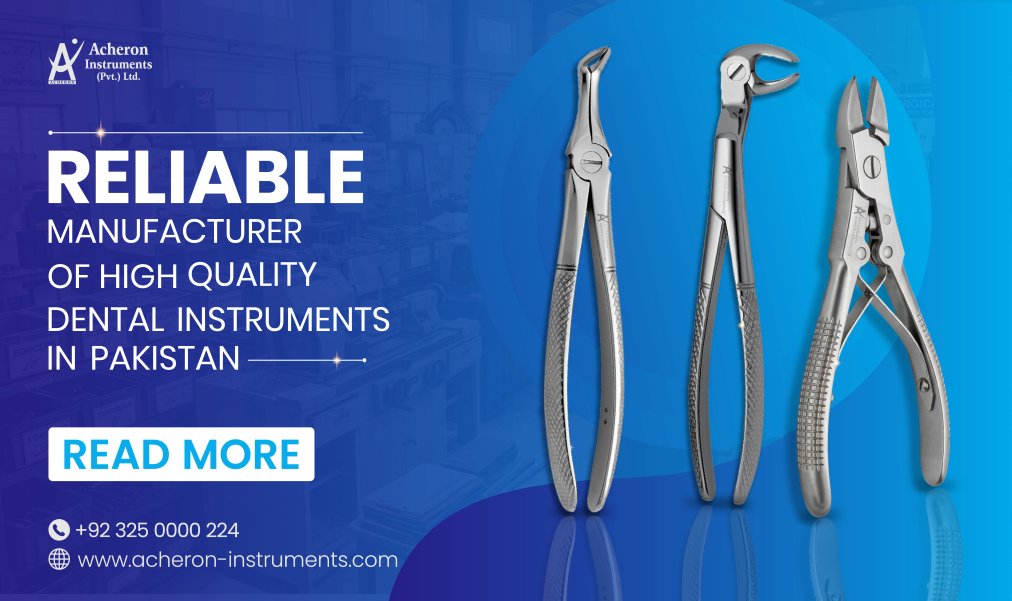
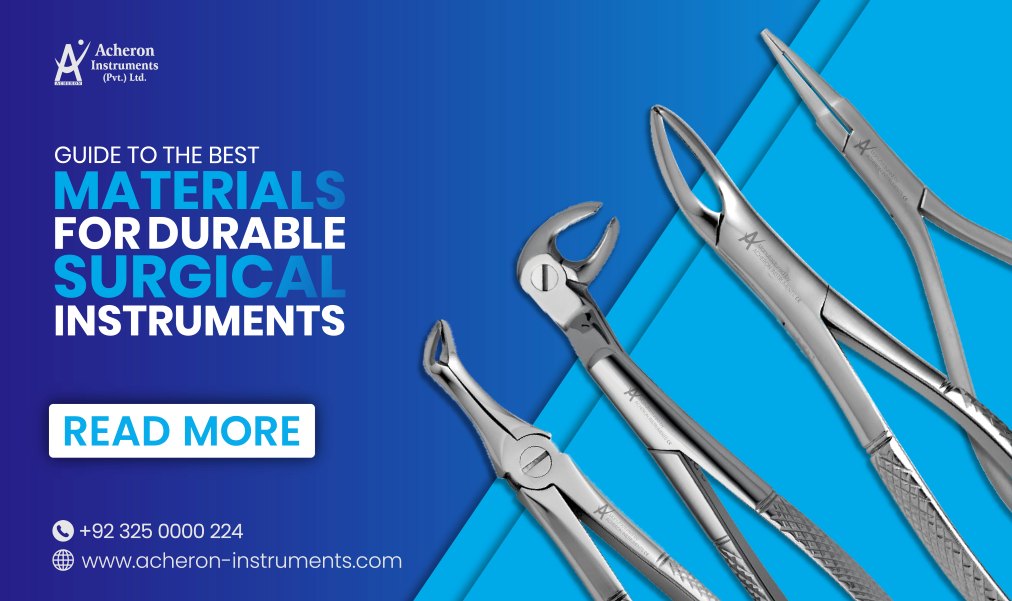
Extraction Forceps
Once the tooth is adequately luxated, extraction forceps are used to complete the removal. These grasping instruments securely hold the tooth crown and apply controlled leverage and rotational forces to extract the tooth from the alveolar socket.
- Primary Function: Grasps the tooth securely to pull it from the expanded socket.
- Common Examples: Bird Break Forceps and Third Molar Forceps are the most commonly used.
- Key Features: Made from high-quality, medical-grade stainless steel to withstand high pressure. The beaks of the forceps are anatomically shaped to conform to the cervical line of specific teeth.
Surgical Curettes
The extraction process does not end the moment the tooth leaves the mouth. After a tooth is removed, the socket must be thoroughly cleaned to prevent infection and promote proper healing. The surgical curette is the instrument used to remove tissue from a tooth socket.
- Primary Function: Used to perform debridement of the alveolar socket, removing granulomas, cysts, or residual infected tissue.
- Common Examples: Lucas curettes are mostly preferred by dentists.
- Key Features: Features a spoon-shaped working end that allows effective scraping of bone walls and a double-ended design that provides two angles for varied access points.
Dental Bone Instruments
Sometimes, the alveolar bone surrounding the tooth must be modified to facilitate extraction or smoothed after the tooth is removed. Bone instruments are essential for contouring the surgical site, ensuring that the gums can heal smoothly over the bone without irritation.
- Primary Function: Reshaping, contouring, or removing sharp edges of the alveolar bone.
- Common Examples: Dental rongeurs (forceps-like tools that nip away bone) and bone files.
- Key Features: Rongeurs have sharp, durable cutting edges and a spring-loaded handle. Bone files operate on a pull stroke to gently smooth rough bone edges.
Tissue Retraction and Suturing Tools
To access the bone and tooth roots effectively, the overlying gum tissue must often be incised and retracted. Once the procedure is complete, these tissues must be reapproximated to ensure primary wound healing. This category encompasses the instruments used to manage soft tissue throughout oral surgery.
- Primary Function: Separating gums from the bone, maintaining a clear visual field, and closing the surgical site.
- Common Examples: Tissue retractors, scalpels, periosteal surgery kits, and needle holders.
- Key Features: The periosteal elevator has a sharp end for separating tissue and a blunt end for retracting it. Needle holders feature a cross-hatched beak to securely grasp a suture needle without it rotating.
Extraction instrument names and their functions
Understanding the names of dental extraction instruments clarifies how each device functions during a procedure. Additionally, the names of extraction instruments dictate their specific design and intended anatomical target.
- Straight Elevator: It is one of the most common extraction instruments, used to loosen the tooth before the forceps are applied.
- Coupland Elevator: The Coupland elevator is used to elevate roots or teeth from the socket.
- Luxator: It has a thinner blade than a standard elevator and is used to cut the periodontal ligament more precisely.
- Root Tip Pick: The root tip pick is used to retrieve broken root fragments in difficult cases with a dental root extractor.
- Cowhorn Forceps: The lower or upper cowhorn forceps are considered a useful tool for molar extraction, especially for lower molars, because their design helps engage the furcation area.
- Periosteal Elevator: Used in surgical extraction when the dentist needs to reflect soft tissue.
- Rongeur: These rongeurs are used to trim bone when necessary during oral surgery.
- Surgical Handpiece and Bur: Used when the dentist must cut bone or section the tooth.
Furthermore, practitioners often utilize pre-packaged instrument sets to maintain efficiency. We offer various tooth extraction kits, including extraction forceps & elevator kits and dental surgery sets, to support a smooth workflow and dependable performance in both general dental practices and oral surgery settings. You can contact us at Acheron Instruments for every dental instrument kit and set to perform safe procedures.
Where to Find High-Quality Tooth Extraction Tools
Acheron Instruments is a leading manufacturer and supplier of premium-quality dental extraction instruments designed for precision, strength, and long-term performance. Our range of tooth extraction tools is manufactured to meet rigorous international standards, ensuring dependable use in routine and surgical dental procedures. With US FDA Approval, EU MDR, ISO 13485, and CE compliance, our instruments are built for safety, durability, and repeated sterilization. Choosing Acheron Instruments means investing in reliable, high-performance surgical tools trusted for professional dental practice.
Conclusion
Proper instrumentation is the foundation of safe and effective oral surgery. By understanding the functions of dental extraction instruments, practitioners can ensure optimal outcomes and promote faster patient recovery. From dental elevators to retraction instruments, all of them are used to perform dental surgeries with utmost care and precision. At Acheron Instruments, we provide a complete range of high-quality dental instruments that make us a trustworthy choice. You can select the correct dental tools for your practice to maintain the highest standard of clinical care. Visit our website or contact us today for more information.
FAQs
What does a dentist use to pull a tooth?
A dentist uses a combination of an elevator and extraction forceps to remove a tooth. The elevator acts as a lever to loosen the tooth, and the forceps act as a dental tool to grasp and extract it securely.
Which instrument is designed to split teeth?
In cases of multi-rooted teeth or severe impaction, the practitioner must divide the tooth to remove it safely. The surgical bur attached to a high-speed handpiece is the instrument used to split teeth. It allows for precise division without excessive force.
Which surgical instrument is used to remove tissue from a tooth socket?
A surgical curette is used to remove tissue or debris from the tooth socket after extraction. The main benefits of these curettes include:
-
Promotes healing by removing infected material that could lead to complications.
-
Maintains bone health to ensure the socket remains clean for potential future implant placement.

-1790596974.jpg)