If you manufacture, import, distribute, or simply want to understand medical devices sold in the United States, one term will come up everywhere: FDA medical device classification. Every device, from a tongue depressor to an implantable pacemaker, is assigned to one of three risk-based categories by the U.S. Food and Drug Administration (FDA). This single decision determines the level of regulatory oversight a product requires, the paperwork needed before it can be sold, and how much time and money it will take to bring it to market.
Furthermore, this guide breaks down FDA medical device classification in simple terms: what it means, how the three device classes differ, examples of class I, class II, and class III medical devices, and what manufacturers must do to stay compliant at each level.
What Is Medical Device Classification?
Device classification is the system the FDA uses to sort medical products based on the level of risk they pose to patients and users. The legal foundation comes from Section 513 of the Federal Food, Drug, and Cosmetic Act (FD&C Act), and it is enforced by the FDA's Center for Devices and Radiological Health (CDRH). Furthermore, rather than treating every product the same way, the FDA has defined roughly 1,700 generic types of devices, grouped into 16 medical specialty panels, and assigned each one to a class based on:
-
Its intended use.
-
Its indications for use.
-
The risks it presents to patients or users.
-
Whether it supports or sustains life.
-
Whether it is implanted.
-
Its technological characteristics.
-
The controls needed to manage its risks.
A device’s intended use and indications for use are especially important. Two products with similar designs may fall into different classifications if they are intended for different medical purposes or patient populations. The FDA classifies devices into three main regulatory classes:
-
Class I: Generally the lowest-risk devices.
-
Class II: Devices presenting moderate or, in some cases, higher risk.
-
Class III: High-risk devices requiring the most stringent regulatory controls.
As the device class increases, the level of FDA oversight generally increases as well.
Categories of Medical Devices: The Three-Tier System
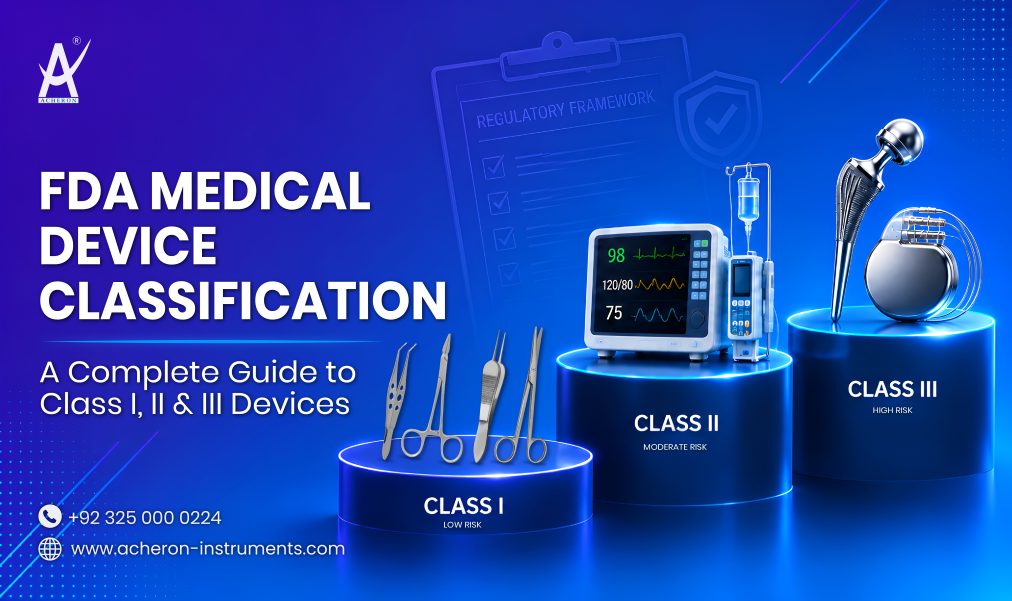
Understanding the different types of medical devices starts with knowing that the FDA does not classify them by what a device does but by how much can go wrong if it fails. This creates three broad categories of medical devices, which are as follows:
|
Class |
Risk Level |
Regulatory Controls |
Typical Pathway |
|
Class I |
Low |
General Controls |
Mostly 510(k)-exempt |
|
Class II |
Moderate |
General + Special Controls |
510(k) premarket notification |
|
Class III |
High |
General Controls + Premarket Approval |
PMA (Premarket Approval) |
These pathways are typical rather than universal. Some Class II devices are exempt from 510(k), while certain older Class III device types may still follow the 510(k) pathway where the FDA has not called for PMAs. Manufacturers must therefore check the regulation and product code for the exact device rather than relying only on its general class.
What Is a Class I Medical Device?
A Class I medical device is considered the lowest-risk category in the FDA system. These products are simple in design, do not sustain or support life, and are unlikely to cause serious harm even if they malfunction. Class I devices are generally not intended to:
-
Support or sustain human life.
-
Be substantially important in preventing impairment of human health.
-
Present a potential unreasonable risk of illness or injury.
Additionally, they are regulated under what the FDA calls general controls, the baseline requirements that apply to essentially every medical device on the U.S. market, regardless of class. Because the risk profile is so low, most Class I devices don't need to go through a full premarket review before hitting the market.
Class 1 Medical Device Examples
The following is a practical list of Class I medical devices you'll recognize:
-
Bandages and adhesive dressings
-
Manual stethoscopes
-
Hospital beds
-
Bedpans and kidney trays
-
Tongue depressors
-
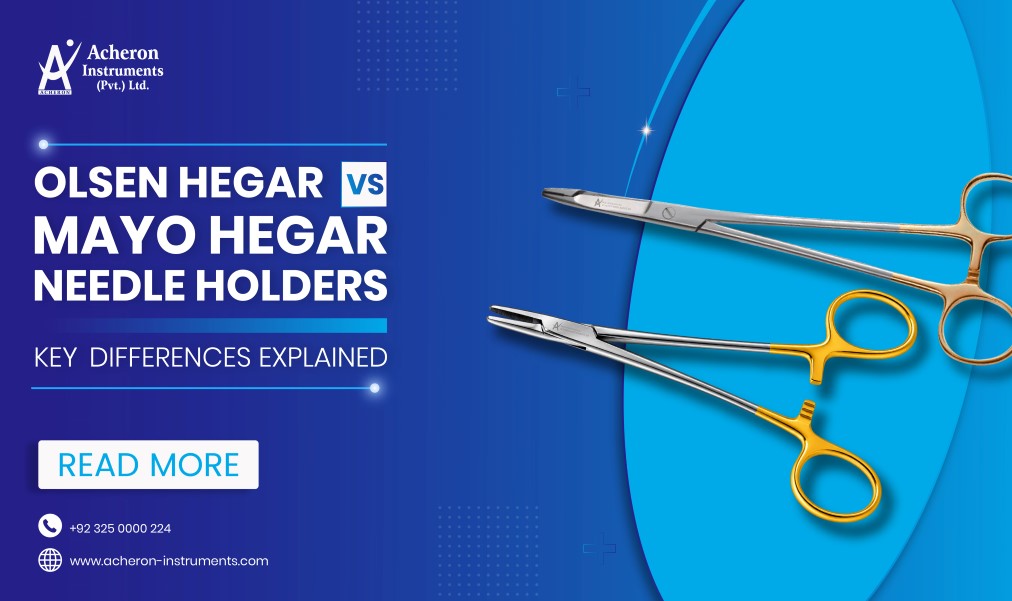
Handheld surgical instruments (scalpels, forceps, retractors, scissors, needle holders)
-
Non-electric wheelchairs
-
Reading glasses (non-prescription)
-
Examination gloves
These Class I medical device examples share a common thread: they are mechanically simple, non-invasive or minimally invasive, and unlikely to cause serious injury if they fail.
Class 1 Medical Device Requirements
Although Class I devices are the lowest-risk tier, "low risk" does not mean "unregulated". Manufacturers must still meet the FDA's General Controls, which include the following:
-
Establishment registration: Registering the manufacturing facility with the FDA annually.
-
Device listing: Listing every device the establishment intends to market.
-
Quality System compliance: Meeting applicable requirements under 21 CFR Part 820 (the Quality System Regulation, transitioning to the harmonized Quality Management System Regulation, or QMSR, aligned more closely with ISO 13485).
-
Labeling compliance: Following labeling rules under 21 CFR Parts 801 and 809, including Unique Device Identification (UDI) where applicable.
-
Medical Device Reporting (MDR): Reporting adverse events under 21 CFR Part 803.
-
Corrections and removals reporting: Under 21 CFR Part 806, if applicable.
What Is a Class II Medical Device?
A Class II medical device carries a moderate risk that cannot be adequately managed through general controls alone. These products are typically more complex than Class I devices and often include electronic components, moving parts, or more invasive functionality, but they're generally well understood in terms of technology and clinical use. Furthermore, these devices are subject to both general controls and device-specific special controls. Special controls may include the following:
-
Performance standards
-
Special labeling requirements
-
Device-specific testing
-
Premarket data requirements
-
Postmarket surveillance
-
Patient registries
-
FDA guidance documents
-
Design or technical requirements
Class 2 Medical Device Examples
Common class 2 medical device examples include the following:
-
Powered wheelchairs
-
Infusion pumps
-
Syringes and hypodermic needles
-
Surgical needles and catheters
-
Diagnostic ultrasound systems
-
X-ray machines
-
Blood pressure monitors
-
Contact lenses
-
Endoscopes
Most Class II devices require a 510(k) premarket notification, through which the manufacturer shows the device is substantially equivalent to a legally marketed predicate device already on the market.
What Is a Class III Medical Device?
At the top of the risk pyramid is the Class III medical device. These products sustain or support human life, are implanted in the body, or present a potential unreasonable risk of illness or injury. Because the consequences of failure are so severe, a Class III device generally cannot rely on general or special controls alone. Instead, it must undergo Premarket Approval (PMA), the FDA's most rigorous device review pathway, which requires scientific evidence, including clinical data in many cases, to show that the device is safe and effective for its intended use.
Class 3 Medical Device Examples
Typical Class III medical device examples include the following:
-
Implantable pacemakers and defibrillators
-
Heart valves
-
Coronary stents
-
Silicone breast implants
-
Cochlear implants
-
Ventilators used in life support
-
Certain implantable neurological devices
Because of the complexity, cost, and time associated with a PMA submission, bringing a Class III device to market is by far the most demanding path in the entire FDA medical device classification system.
Class 1 vs Class 2 Medical Device: What's the Real Difference?
The Class 1 vs. Class 2 medical device comparison comes up often for manufacturers trying to figure out where their product lands. Here is the practical difference between these two classes.
|
Factor |
Class I Device |
Class II Device |
|
Risk level |
Low |
Moderate |
|
Regulatory controls |
General Controls only |
General + Special Controls |
|
Premarket submission |
Usually exempt |
Usually requires 510(k) |
|
Complexity |
Simple, often no moving parts |
More complex, may include electronics |
|
Example |
Manual surgical scissors |
Powered wheelchair |
In short, a class 2 medical device requires everything a class 1 device does, plus additional controls designed to manage the extra risk that comes with greater complexity or invasiveness.
Class I, II, and III Medical Devices Side by Side
Whether you refer to it as Class I medical devices or the more casual Class II and Class III medical devices comparison, the underlying principle remains the same: regulatory scrutiny scales directly with patient risk. Moreover, putting the full Class I, II, and III medical devices picture together makes the escalating regulatory logic easier to see:
|
Class |
Risks |
Control |
Submission |
Examples |
|
Class I |
Low |
General Controls |
Mostly exempt |
Bandages, manual instruments, exam glove |
|
Class II |
Moderate |
General + Special Controls |
510(k) |
Infusion pumps, X-ray machines, catheters |
|
Class III |
High |
General Controls + PMA |
Premarket Approval |
Pacemakers, heart valves, stents |
Why Choosing the Right Manufacturing Partner Matters
Regulatory classification is only one part of the equation; manufacturing quality is equally important, especially for Class I medical device examples used every day in operating rooms and clinics, such as scalpels, forceps, retractors, scissors, and needle holders. This is where a manufacturer like Acheron Instruments stands out. We manufacture general surgery, dental, orthopedic, ENT, cardiovascular/thoracic (CVT), and veterinary instruments crafted from premium German stainless steel. At Acheron Instruments, we position our surgical and dental instrument lines as FDA-registered and ISO 13485-certified, with CE marking and EU MDR compliance, and we have also integrated GS1-based Unique Device Identification (UDI) into our product line to support traceability requirements under both U.S. FDA and EU MDR frameworks.
Additionally, for hospitals, clinics, and distributors sourcing Class I devices and other surgical instrument categories, that combination of rigorous quality control, documented regulatory compliance, and decades of craftsmanship experience is exactly what should sit behind any product carrying an FDA classification. Acheron Instruments backs its instruments with a lifetime guarantee and serves healthcare providers across the USA, Australia, the Middle East, Latin America, and Africa, making it a practical option for organizations that need reliable, compliant Class I surgical tools at scale.
Conclusion
FDA medical device classification is a framework that determines how a product is developed, manufactured, documented, and brought to patients safely. Whether you're evaluating a simple Class I device, a moderate-risk Class II device, or a high-stakes Class III device, understanding where a product sits in this system is the first step toward compliance, safety, and successful market entry. Moreover, for manufacturers and buyers focused specifically on the Class I surgical instrument space, partnering with an experienced, compliance-focused manufacturer like Acheron Instruments can make the difference between a product that merely meets the minimum bar and one that's genuinely built to last. You can contact us or visit our website for more information.

-1790596974.jpg)