Successful thoracic surgery depends on a clear view, controlled access, and careful handling of delicate lung tissue. Because the lungs occupy much of the chest cavity, they can obstruct access to important anatomical structures, including the pulmonary hilum, mediastinum, diaphragm, esophagus, pleura, and pericardium. The Allison Lung Retractor is designed to solve this problem.
Although it has a relatively simple design, it remains a valuable instrument in open thoracic and cardiothoracic surgery. Furthermore, this blog explores the major benefits of the Allison lung retractor in thoracic surgery, along with its characteristics and considerations for safe use.
What Is an Allison Lung Retractor?
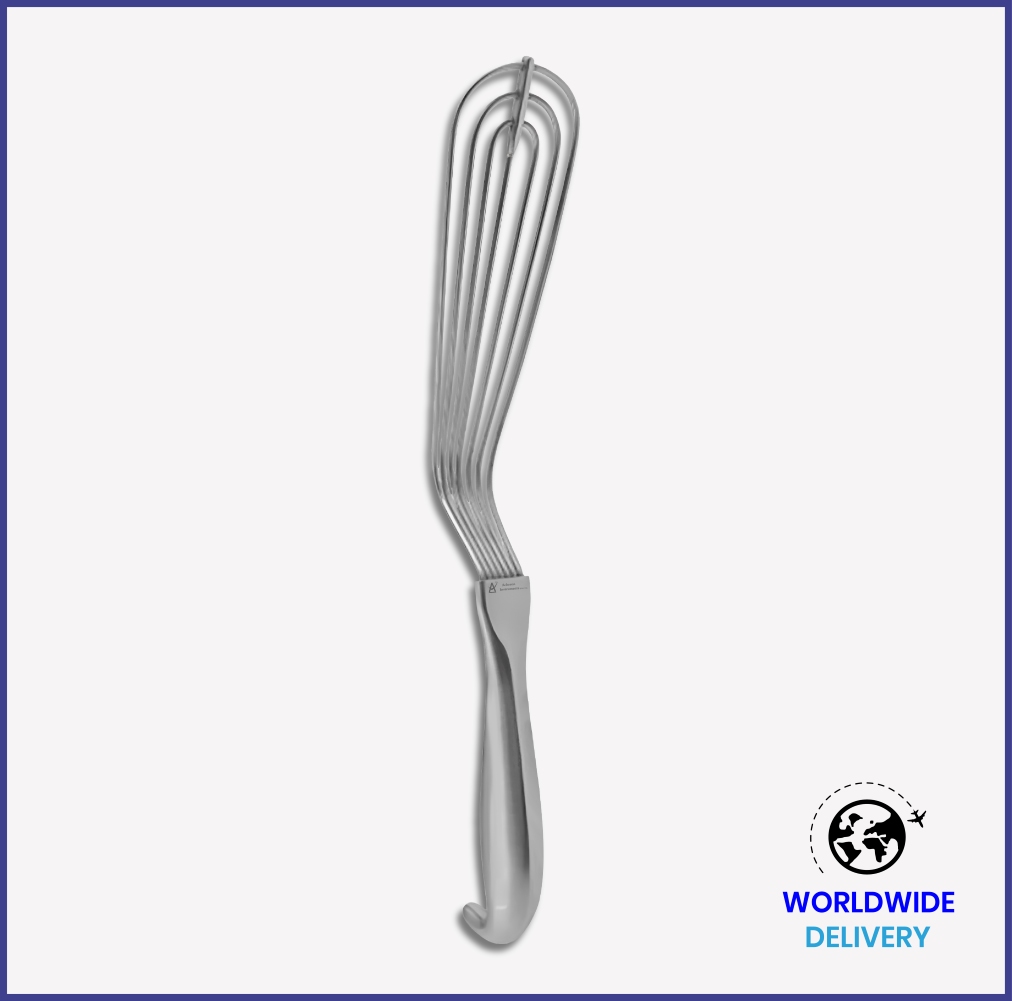
The Allison Lung Retractor is a handheld, non-ratcheted surgical instrument designed to hold, support, and retract lung tissue, especially in cardiothoracic (heart and chest) surgeries. It generally features a long shaft, a solid handle, and a broad working end made from flexible wires arranged in a flattened spatula shape. Among a wide range of surgical retractors, this instrument is standard equipment in any major thoracic tray and is commonly used in the following:
-
Thoracotomies: Opening the chest wall to access the lungs or heart.
-
Lobectomies/Pneumonectomies: Surgical removal of a portion of a lung or an entire lung.
-
Cardiac Surgeries: Pushing aside the surrounding lung tissue to achieve clear exposure of the heart and mediastinal structures.
Furthermore, the following are the main features of the Allison lung retractor that ensure safety and efficiency in the operating room.
-
Flexible wire-loop blade distributes retraction pressure evenly across a wide surface area.
-
Flattened, non-traumatic wire rails to protect fragile blood vessels and airways.
-
Angled/Bent shaft design to enhance the surgeon’s line of sight.
-
Solid handle with a finger hook for a secure, ergonomic grip for the assistant.
-
Multiple blade width options to suit all patient anatomies.
Major Benefits of the Allison Lung Retractor in Thoracic Surgery
Improves Visualization of the Surgical Field
The primary benefit of the Allison Lung Retractor is improved exposure. By manipulating the lung away from the operative target, the instrument allows the surgeon to see deeper structures more clearly. Clear exposure supports accurate anatomical identification before vessels, bronchi, adhesions, or other structures are dissected or divided. Additionally, a better view is especially useful when working around the following surgical areas:
-
Pulmonary arteries and veins
-
Lobar and main bronchi
-
Hilar lymph nodes
-
Mediastinal structures
-
Thoracic esophagus
-
Diaphragm
-
Pericardium
-
Pleural adhesions
- Posterior chest wall
Avoids Direct Clamping of Lung Tissue
The Allison lung retractor supports lung tissue from one side without closing jaws around it. This is useful when the goal is to displace a lobe or lung surface rather than capture or manipulate a specific tissue edge. Moreover, the retractor does not replace lung-grasping forceps in every situation; instead, it gives the surgical team another tissue-handling option when broad support is more appropriate than grasping.
Provides Continuously Adjustable Retraction
Because the instrument is handheld, its position can be changed immediately as the operation progresses. The assistant can adjust the following:
-
The direction of pull
-
The angle of the blade
-
The amount of pressure
-
The depth of placement
-
The section of lung being supported
This flexibility is valuable during operations in which the surgical target changes. Exposure may need to shift from the anterior hilum to the posterior chest, from the upper lobe to the diaphragm, or from the mediastinum to the pleural cavity.
Supports Access to Deep Thoracic Structures
The long shaft of the Allison lung retractor allows the blade to reach deeply positioned tissues without requiring the operator’s hand to enter the chest cavity. This extended reach can assist exposure of the following surgical areas:
-
Posterior mediastinum
-
Pulmonary hilum
-
Inferior pulmonary ligament
-
Diaphragmatic surface
-
Thoracic esophagus
-
Deep pleural cavity
-
Pericardial region
Reduces Instrument Crowding Near the Incision
Thoracic operations often require several instruments to pass through the same opening, including suction devices, clamps, staplers, needle holders, energy instruments, and dissecting tools. The Allison Lung Retractor has a relatively narrow shaft compared with broad solid retractors or larger mechanical assemblies. Its handle can remain outside the main working zone while the blade supports the lung internally. Furthermore, this low-profile design can help preserve space around the incision and reduce interference with the surgeon’s hands and instruments.
Versatile Across Thoracic Procedures
The Allison Lung Retractor can support exposure during a variety of open or limited-access thoracic procedures. Its exact role depends on the operative approach, patient anatomy, incision size, and surgeon preference. Moreover, potential applications include the following:
-
Lobectomy
-
Pneumonectomy
-
Segmentectomy
-
Open lung biopsy
-
Pulmonary decortication
-
Pleural surgery
-
Thoracic trauma procedures
-
Mediastinal surgery
-
Esophageal surgery
-
Diaphragmatic repair
-
Selected cardiac procedures
-
Open lung transplantation
Allison Lung Retractor vs Other Retractors
Before comparing surgical retractors, it is important to understand that each instrument is designed for a specific type of tissue, surgical approach, and exposure requirement.
|
Instruments |
Primary Use |
Main Characteristics |
|
Allison Lung Retractor |
Supports and moves lung tissue |
Broad wire-spatula blade |
|
Finochietto Retractor |
Spreads ribs during thoracotomy |
Self-retaining rib spreader |
|
Deaver Retractor |
Retracts deep organs and soft tissue |
Curved solid blade |
|
Davidson Retractor |
Retracts scapular or chest-wall tissues |
Strong curved blade |
|
Lung Grasping Forceps |
Holds and manipulates lung tissue |
Opposing atraumatic jaws |
|
Wound Retractor |
Holds incision edges apart |
Circumferential wound exposure |
Furthermore, the Allison Lung Retractor does not replace a Finochietto rib spreader. A rib spreader opens the thoracotomy by separating the ribs, whereas the Allison retractor moves the lung after the chest cavity has been accessed. It also differs from lung forceps: forceps grip tissue between jaws, while the Allison instrument uses a broad surface to support and displace it.
Safe-Use Considerations
-
Select the Correct Size: The blade should fit the patient’s size, incision, anatomy, and operative depth. A blade that is too large may be difficult to position, while one that is too small may cause excess pressure or inadequate exposure.
-
Inspect the Blade Before Surgery: The wire surface should be smooth and properly aligned. A bent wire, sharp edge, crack, corroded area, or damaged joint can injure tissue or affect performance.
-
Use the Minimum Effective Force: Retraction should create adequate exposure without unnecessary compression.
-
Avoid Blind Placement: Blind advancement can place vascular, bronchial, cardiac, diaphragmatic, or esophageal structures at risk, so the blade should be introduced under direct visualization.
Where to Find Premium-Quality Allison Lung Retractor
At Acheron Instruments, we manufacture and supply the Allison Lung Retractor along with a comprehensive range of surgical retractors for thoracic surgery, cardiovascular procedures, general surgery, and other medical specialities. Our retractors are manufactured from high-quality, surgical-grade materials and undergo careful inspection to ensure durability, accurate construction, smooth surfaces, reliable handling, and consistent performance during surgical procedures.
Our surgical retractors are produced in accordance with recognized quality and regulatory requirements, including ISO 13485, ISO 7153-1, CE compliance, EU MDR requirements, and applicable US FDA standards, depending on the specific product and destination market. Whether you are a hospital purchaser, medical supplier, importer, or surgical instrument distributor, Acheron Instruments can support your requirements with a broad product range, OEM manufacturing, customized branding and packaging, and dependable international supply services.
Conclusion
The benefits of the Allison Lung Retractor in thoracic surgery come from its simple yet practical design. Its broad wire-spatula blade supports the lung over a relatively wide surface area, while its long shaft helps the surgical team reach deep structures without crowding the operating area. When selected appropriately and handled by a trained surgical team, the Allison Lung Retractor provides a controlled and reliable method of maintaining the exposure needed for precise thoracic surgery.
At Acheron Instruments, we manufacture and supply high-quality Allison Lung Retractors and a comprehensive range of surgical retractors for thoracic, cardiovascular, general, orthopedic, and other surgical procedures. Contact us today to request product specifications, discuss bulk-order requirements, explore customization options, or receive a competitive quotation for our surgical instruments.

-1790596974.jpg)