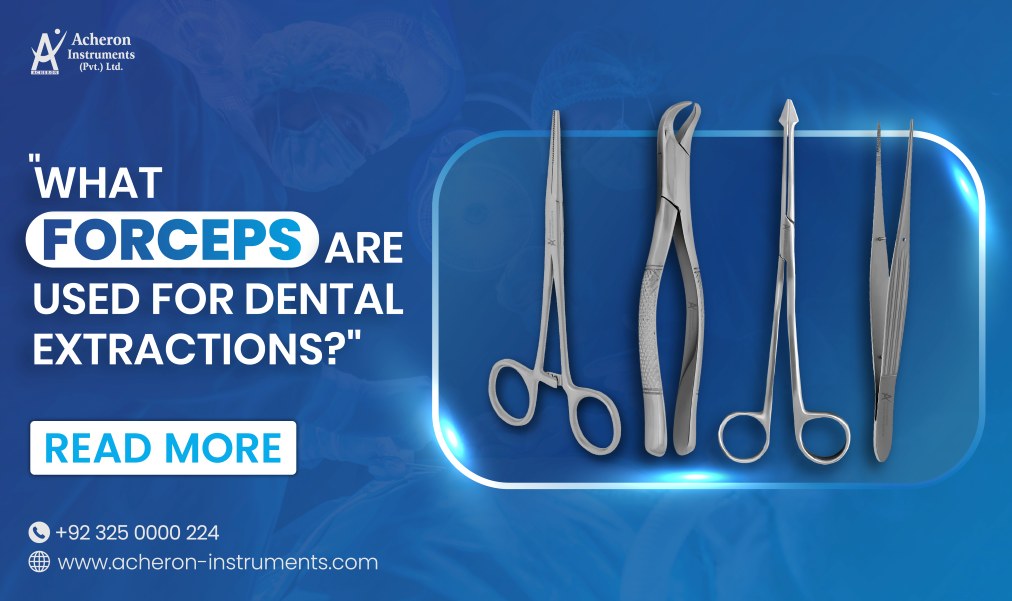
Dental extraction forceps are essential tools in dentistry used to address various dental health issues, such as severe decay, impacted wisdom teeth, or crowded teeth. They play a crucial role in orthodontic and oral procedures, ensuring surgical performance and precision. However, there is no single pair of forceps used for every extraction. Different instruments are designed for different teeth, jaw positions, root shapes, and clinical situations.
This guide explores what forceps are used for in dental extraction procedures, how they are numbered, their anatomy, and the specific teeth each is designed to remove.
What Are Dental Extraction Forceps?
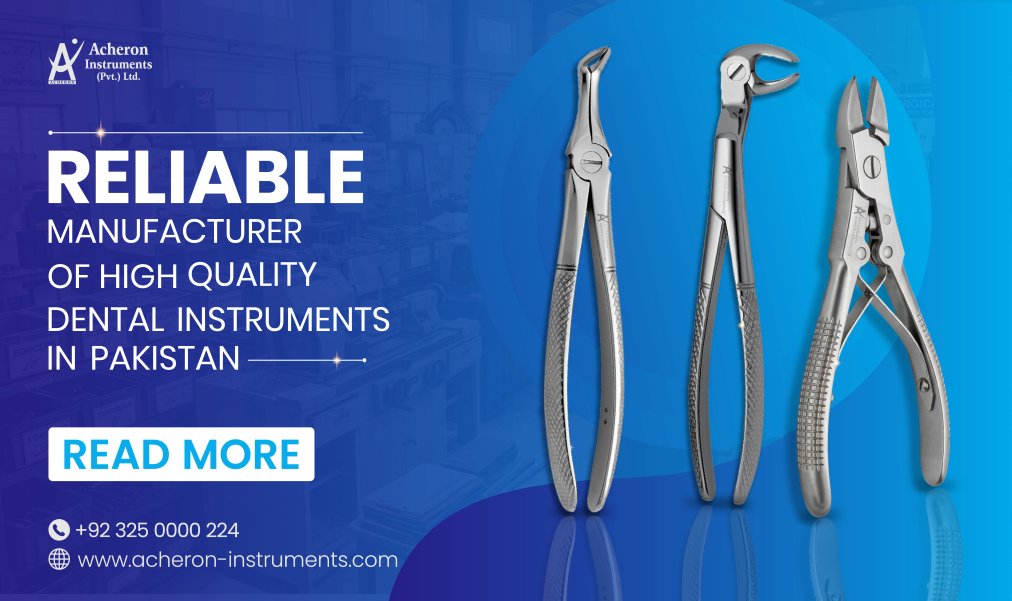
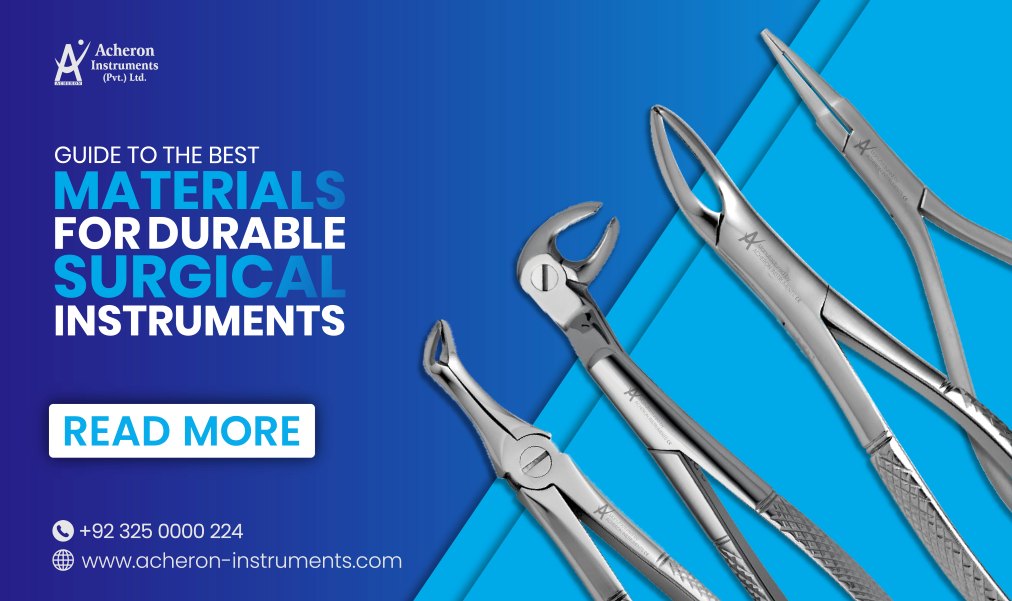
Dental extraction forceps are specialized instruments primarily used to firmly grasp, luxate, and pull teeth from their alveolar bone sockets. Dental forceps assist in minimizing trauma at the extraction site, thereby facilitating rapid tooth healing. Furthermore, every pair of forceps has three key components:
-
Beaks (jaws): The working ends grip the tooth. Their shape matches the tooth's root anatomy.
-
Hinge (joint): The pivot point that transfers force from the handle to the beaks.
-
Handles: The part the clinician grips, engineered for a secure, ergonomic hold.
These extraction forceps have unique beaks that distinguish one forceps from another and are designed to curve around the contour of the tooth crown. The target area is gripped with the help of their pointed beaks, while the serrated handles provide the operator with a firm and secure grip. You can explore our Extraction Forceps and Elevator sets to expand your options.
How Dental Forceps Are Numbered
Forceps are identified by a universal numbering system. This shorthand tells clinicians the intended tooth and arch at a glance. Learning these numbers is essential for efficient chairside communication and instrument selection. While systems vary slightly by manufacturer, the most common patterns include the following:
-
Numbers alone (e.g., #150, #151) for versatile universal forceps.
-
Numbers with letters (e.g., #23, #88R/L) for region- or side-specific designs.
Types of Dental Extraction Forceps
Forceps are generally classified by the arch they serve (maxillary/upper vs. mandibular/lower) and the tooth type (incisors, premolars, or molars). The most widely used forceps in clinical dentistry are listed below.
Maxillary (Upper) Forceps
-
Upper Universal Forceps (#150): The #150 is one of the most versatile instruments in the tray. It is designed for the removal of maxillary incisors, canines, and premolars. Its slightly curved, parallel beaks adapt well to the anterior and premolar regions of the upper arch.
-
Upper Incisor and Canine Forceps (#1): Straight beaks make the #1 an ideal choice for maxillary anterior teeth with single, conical roots.
-
Upper Molar Forceps (#53R and #53L): These are side-specific (right and left). A pointed beak engages the buccal furcation between the two buccal roots, while the palatal beak seats against the single palatal root.
-
Upper Third Molar Forceps (#210): Featuring a bayonet design, the #210 reaches the back of the mouth to remove upper wisdom teeth, which often have fused or irregular roots.
-
Upper Premolar Forceps: Designed with beaks that accommodate the oval cross-section of premolar roots, providing a firm grip without crushing the crown.
Mandibular (Lower) Forceps
-
Lower Universal Forceps (#151): The mandibular counterpart to the #150, the #151 removes lower incisors, canines, and premolars. Its beak curves at a sharper angle to reach the lower arch.
-
Lower Molar Forceps (#17): Both beaks are pointed to engage the bifurcation of the two roots of mandibular molars from the buccal and lingual sides.
-
Lower Cowhorn Forceps (#23): The distinctive cowhorn design features two sharp, pointed beaks that fit into the furcation of lower molars. As the handles are closed, the beaks act as a wedge, elevating the tooth directly from its socket and often eliminating the need for extensive luxation.
How to Choose the Right Extraction Forceps
Selecting the correct forceps depends on the following factors, which include:
-
Tooth Type and Location: Anterior, premolar, or molar; upper or lower arch.
-
Root Anatomy: Single-rooted vs. multi-rooted teeth require different beak designs.
-
Side of the Arch: Some molar forceps are right- or left-specific.
-
Patient Age: Pediatric vs. adult instruments.
-
Case Complexity: Cowhorn or bayonet forceps for difficult or impacted teeth.
Why Choose Acheron Instruments for Dental Surgery Instruments?
Acheron Instruments is committed to manufacturing high-quality dental extraction forceps and dental surgery instruments that provide dentists and oral surgeons with the control, precision, and reliability required during tooth extraction procedures. Manufactured from premium-grade German surgical stainless steel, our range of dental surgery instruments is engineered for durability, secure handling, accurate tooth engagement, and consistent performance in demanding clinical environments.
Whether you require universal extraction forceps, upper and lower molar forceps, root forceps, cowhorn forceps, or other specialized dental instruments, Acheron Instruments focuses on dependable craftsmanship and professional-grade performance. Reasons to choose Acheron Instruments for dental extraction forceps include:
-
ISO, FDA, and CE certified for international quality compliance
-
Manufactured from premium German surgical stainless steel
-
Designed for precise gripping, controlled tooth extraction, and dependable handling
-
Suitable for a wide range of dental and oral surgery procedures
-
Backed by a comprehensive five-year warranty
-
Supported by responsive 24/7 customer service
-
Competitively priced for dental clinics, hospitals, distributors, and oral surgery facilities
Conclusion
So, what forceps are used for dental extractions? The answer depends on the tooth being removed. Choosing the right dental extraction forceps is a blend of understanding tooth anatomy, arch position, and the specific design of each instrument. From versatile universal forceps like the #150 and #151 to specialized molar and cowhorn forceps, each tool has a defined purpose that makes extractions safer and more efficient.
Furthermore, at Acheron Instruments, we provide high-grade German stainless steel dental instruments at cost-effective prices. Our dental instruments are sterilizable and reusable in the long run, ensuring durability. You can contact us or visit our website to explore our complete product range.

-1790596974.jpg)