When it comes to performing surgical procedures, deep surgical exposure can make the difference between a smooth procedure and a complicated one. Even when the operative target is relatively small, surrounding skin, muscle, fascia, soft tissue, or organs can obstruct the field. Among the many retractors, the Kelly retractor is valued for its simple design, controlled tissue retraction, versatility, and reliable exposure across a range of surgical situations. Whether used in general surgery, gynecology, or cardiovascular procedures, this hand-held retractor delivers a combination of exposure, control, and patient safety that has kept it a staple in surgical trays for decades.
This guide explores the surgical advantages of Kelly retractors, examining their design, applications, and the specific features that make them indispensable across multiple surgical specialties.
What Is a Kelly Retractor?
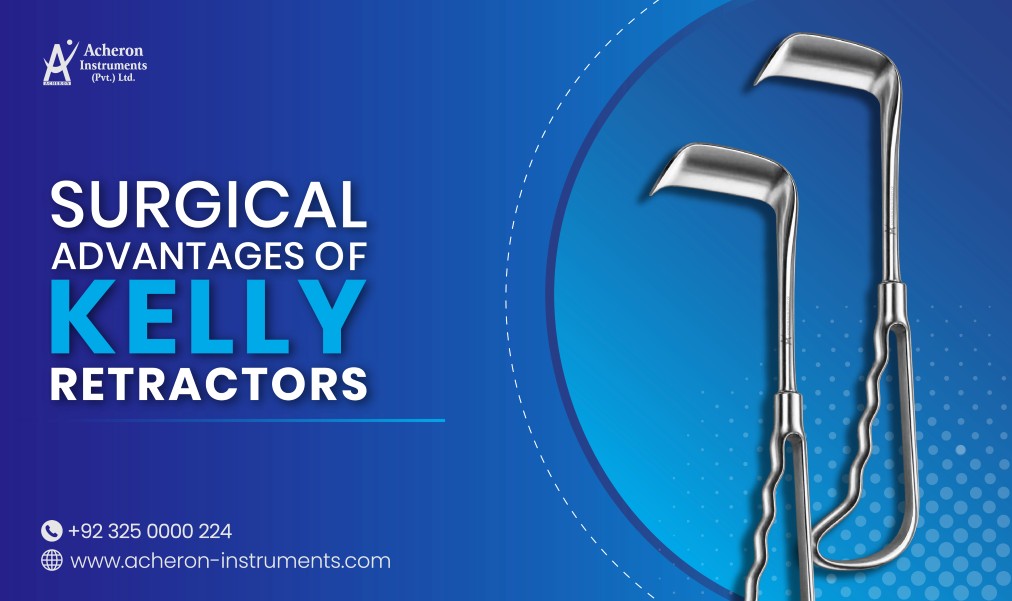
The Kelly retractor is a handheld surgical retractor primarily used to retract and manipulate the edges of a wound or incision, exposing the underlying tissues and the operative field. Its specialized right-angled blade design allows surgical teams to retract large tissue sections, organs, or heavy muscular layers safely and smoothly. Moreover, the Kelly retractor is typically available in two handle configurations, including loop (hollow-grip) and fenestrated, and comes in a range of sizes and lengths to accommodate different procedures and tissue depths. To understand where it fits among other retraction tools, see this overview of the types of surgical retractors and their uses.
Furthermore, the typical Kelly retractor incorporates the following design and characteristics:
-
Wide right-angled L-shaped blade
-
Terminal downward-curved blade tip
-
Concave upper blade surface
-
Atraumatic smooth/blunt edges
-
Ergonomic fenestrated/loop handle
-
German-grade stainless steel
-
Multiple blade sizes (depth & width)
For a broader understanding of how retractors fit into the surgical toolkit, explore this comprehensive guide to surgical instruments and this reference on operating instrument names and their applications.
Key Surgical Advantages of Kelly Retractors
Atraumatic Tissue Retraction
One of the most significant advantages of the Kelly retractor is its ability to expose the surgical field without harming surrounding structures. This atraumatic quality is especially valuable when working around delicate organs or vascular structures, where excessive pressure or accidental contact could lead to tissue damage or bleeding. Improved exposure can help surgeons with:
-
Identify anatomical structures more clearly
-
Follow tissue planes
-
Position other surgical instruments accurately
-
Perform dissection with greater control
-
Maintain visual awareness of surrounding structures
-
Access deeper areas of the incision
Wider, Clearer Surgical View
The Kelly retractor is designed to maximize the surgical view for the medical professional. The upper surface of the blade is concave, resulting in a wider surgical view after retraction. The design may allow the blade to:
-
Reach underneath an incision edge.
-
Retract soft tissue away from deeper structures.
-
Maintain separation between tissue layers.
-
Provide leverage while keeping the handle accessible to the assistant.
Ergonomic, Fatigue-Free Handling
Lengthy procedures place considerable physical strain on the surgical team. The Kelly retractor addresses this challenge through thoughtful ergonomic design. Its fenestrated handle with anterior ridges accommodates the fingers, allowing surgeons to perform lengthy procedures without fatigue. Moreover, this adaptive design reduces hand strain during long surgeries, translating into steadier control and sustained performance throughout demanding operations.
Stability and Slip-Free Grip
A retractor that slips during a procedure can compromise exposure and safety. Both the hollow-grip and loop-handle designs of the Kelly retractor provide a firm, secure hold that prevents slippage. This stability ensures consistent retraction and requires less readjustment, making the process easier and faster.
Versatility Across Surgical Specialties
Kelly retractors are used in various surgical procedures, including cardiovascular, gynecologic, intestinal, rectal, and general surgeries, to retract tissues atraumatically. The exact retractor used during an operation ultimately depends on factors such as:
-
Surgical specialty
-
Procedure
-
Incision depth
-
Tissue characteristics
-
Patient anatomy
-
Surgeon preference
-
Required working space
Furthermore, in abdominal surgeries, it provides a view of the internal organs without destruction of the surrounding tissues. In orthopedic contexts, retractors of this type are used to hold back muscles or tendons during joint repair or replacement.
Available in Multiple Blade Sizes
A shallow incision requires different retraction from a deeper abdominal or soft-tissue exposure. For this reason, Kelly retractors are available with multiple blade widths and depths. The availability of different sizes allows a surgical team to choose the retractor based on:
-
Incision size
-
Operative depth
-
Patient anatomy
-
Amount of tissue being displaced
-
Width of exposure required
Kelly Retractor vs. Self-Retaining Retractor
Understanding the advantages of the Kelly retractor becomes easier when comparing it with a self-retaining design.
|
Feature |
Kelly Retractor |
Self-Retaining Retractor |
|
Type |
Handheld |
Self-Retaining |
|
Requires continuous holding |
Yes |
Usually no |
|
Easy to reposition |
Very easy |
Requires adjustment |
|
Retraction angle |
Manually adjustable |
Generally maintained after setting |
|
Mechanical complexity |
Low |
Higher |
|
Best advantage |
Dynamic manual control |
Stable hands-free exposure |
|
Assistant requirement |
Usually yes |
Reduced once positioned |
Neither design is universally better. A Kelly retractor is advantageous when adjustable, responsive manual retraction is needed, while self-retaining systems are useful when stable, long-term exposure without continuous manual holding is more important. Self-retaining retractors are specifically valued for maintaining a stable operative view while freeing an assistant's hand, particularly when assistance is limited.
Where to Find High-Quality Kelly Retractors
Acheron Instruments is committed to manufacturing Kelly retractors that provide surgeons with reliable exposure, precision, and control during surgical procedures. Manufactured from premium-grade German surgical stainless steel, our range of surgical retractors is engineered for durability, smooth handling, and consistent performance in demanding surgical environments. Reasons to choose Acheron Instruments for high-quality Kelly retractors include the following:
-
ISO, FDA, and CE-certified for international quality compliance
-
Manufactured using premium German surgical stainless steel
-
Designed for reliable tissue retraction and improved surgical exposure
-
Backed by a comprehensive five-year warranty
-
Supported by responsive 24/7 customer service
-
Competitively priced for hospitals, clinics, and surgical facilities
Contact us today to learn more about Kelly retractor specifications, available sizes, customized solutions, and bulk purchasing options tailored to the needs of your healthcare facility.
Conclusion
The surgical advantages of Kelly retractors come from a combination of simplicity, versatility, controlled retraction, and adaptable surgical exposure. From its atraumatic right-angled blade and concave surface, which widen the surgical view, to its ergonomic fenestrated handle and durable stainless steel construction, every feature is designed to enhance exposure while protecting the patient. Request a quote or visit the Acheron Instruments website for more information.

-1790596974.jpg)