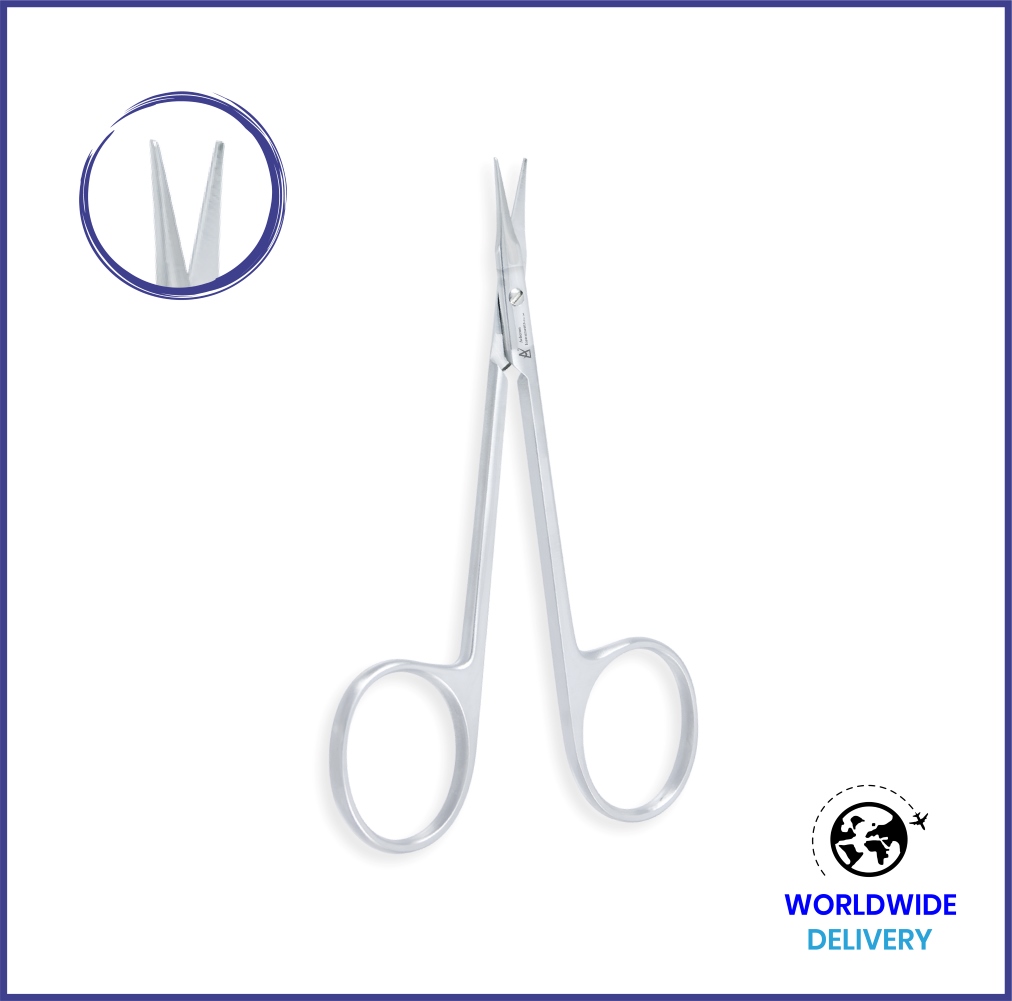

Do you want surgical scissors that deliver optimum precision and control during surgery? Among these most trusted surgical scissors or other tools for fine dissection are the Tenotomy Scissors. The medical professionals used these Tenotomy scissors in surgical procedures that require control, accuracy, and minimal tissue trauma. Moreover, surgeons use these selected pairs of scissors to perform microsurgeries and delicate procedures, especially neurological, ophthalmic, and plastic surgery. They often use tenotomy scissors to carry out tenotomies, where tendons are cut to correct deformities. In this detailed blog, we have discussed everything you need to know, from the tenotomy scissors uses, types, benefits, and features to the comparison with many similar surgical instruments, including iris and Metzenbaum scissors.
What Are Tenotomy Scissors?
Among different types of surgical scissors, Tenotomy scissors stand out as one of the crucial surgical instruments designed with small, fine tips for precise cutting and dissecting delicate tissues in the eyes, brain, and other sensitive regions. The term “tenotomy” refers to a simple procedure of removal or cutting of tendons, followed by a rapid recovery. Surgeons mostly use these scissors to perform minimally invasive surgeries, such as tendon release, manipulation of fine ocular tissues, dissecting nerves, etc. Furthermore, we offer you Tenotomy scissors in straight or curved blades to access superficial and narrow surgical areas. The fine design and sharp blades are what make them stand out from usual surgical scissors for a high degree of control.
You can compare Tenotomy Scissors with Iris Ceramic Scissors and Castroviejo Micro Scissors to find the right tool for delicate procedures.
Tenotomy Scissors Uses
Tenotomy scissors are specialized surgical instruments that grasp, separate, manipulate, and make accurate incisions in delicate tissues in narrow and confined surgical areas, especially in the brain, eye, or deep nasal cavities. The long, thin blades of these scissors facilitate cutting the soft tissues with minimal damage to the nearby healthy tissues or structures. Moreover, Surgeons widely use these scissors in the following common applications, which are described below:
-
Ophthalmic Surgery: Precisely cut, dissect, and manipulate delicate membranes or eye tissues.
-
Plastic and Reconstructive Surgery: Used for controlled dissection and modification of small structures and trimming of grafts.
-
Neurosurgery: Grasp, separate, and manipulate nerves and other delicate tissues in the brain and spinal cord without internal damage.
-
Microsurgery: Perform accurate and exact cuts to facilitate procedures, such as nerve and vessel repair.
-
Tendon Release Procedures: Efficiently cut tendons with minimal damage during contracture releases.
-
Pediatric Orthopedics: Facilitate procedures Achilles tenotomy in clubfoot treatment.
-
General Surgery: Precisely cut nerves or small blood vessels during different general procedures.
Features and Benefits of Tenotomy Scissors
Understanding the features and benefits of Tenotomy scissors provides several key benefits for surgeons while helping to appreciate the clinical value of these instruments. The following feature and benefit table shows you the appropriate usage of these scissors in performing delicate procedures.
|
Features |
Benefits |
|
Fine, Tapered Blades |
Precisely dissect and cut delicate tissues with minimal damage to the nearby healthy tissues. |
|
Narrow Profile |
Grant access and exposure to the deep and narrow surgical sites. |
|
Sharp Tips (Optional) |
Precisely cut through delicate membranes and tissues with controlled incisions. |
|
Blunt Tips (Optional) |
Used to separate delicate ocular, brain, or tissue in different regions without puncturing or cutting. |
|
Ergonomic Handle Design |
Easy and controlled handling to reduce slippage risk. |
|
Variety |
Available in straight, curved, or angled profiles to get better access in deep cavities or around anatomical structures. |
Types of Tenotomy Scissors
The medical professionals have access to different tenotomy scissors, and each one of them is used for specific procedures.
Stevens Tenotomy Scissors
One of the famous variants of tenotomy scissors is the Stevens Tenotomy Scissors. This scissor comes with round and pointy tips for precise dissection and cutting of the muscle tissues, skins, membranes, or other delicate tissues. Surgeons often select these scissors during neurological, ocular and plastic surgeries. Additionally, these scissors feature delicate jaws, narrow blades, and long shanks to contribute to the accuracy of tissue dissection.
Do you want to know more? Read Stevens Tenotomy Scissors.
Reynolds Tenotomy Scissors
Known for their ultra-sharp and short blades, Reynolds Tenotomy Scissors are ideal for sharp and controlled dissection of blood vessels, nerves, and organ membranes. Surgeons prefer these scissors for cutting through tissues during ocular, ENT, and vascular grafting surgeries. Furthermore, the straight profile of this scissor facilitates superficial dissection. Whereas the curved variant is required for dissection in deep and narrow areas.
Westcott Tenotomy Scissors
These scissors come with curved blades and a spring handle design to facilitate the precise cutting of the delicate eye tissues during microsurgery and ophthalmic procedures. The medical professional utilizes these Westcott Tenotomy Scissors to contour to the eye surface for increased accuracy. The fine serration of these scissors helps in controlled and improved grip on the soft tissues.
Learn more in our detailed information on Westcott Tenotomy Scissors.
Tenotomy Scissors vs Iris Scissors
Tenotomy scissors and iris scissors are equally essential instruments to perform microsurgery or ophthalmic procedures. The Iris scissors have shorter and sharper blades that are used for superficial dissection or suture removal, while tenotomy scissors have longer and more slender blade lengths that offer greater reach and control in narrow spaces.
Moreover, both of them have their structural and functional differences. If the medical professionals are comparing these two scissors with each other, they need to understand their differences first to make an informed choice.
|
Feature |
Tenotomy Scissors |
Iris Scissors |
|
Blade Length |
Longer and more slender |
Shorter and sharper |
|
Blade Tip |
Often finer and tapered |
Slightly broader |
|
Primary Use |
Deep or delicate tissue dissection |
Surface-level tissue or suture cutting |
|
Specialty Focus |
Ophthalmic, neuro, plastic surgery |
General surgery, ophthalmology |
What is the Difference Between Metzenbaum and Tenotomy Scissors?
The Metzenbaum scissors are designed with longer, blunt tips that are excellent for larger areas of dissection, whereas the tenotomy scissors are designed with sharp blades for fine-detail work, often in ophthalmic or neurosurgical procedures. Let’s break down tenotomy scissors vs Metzenbaum further with a direct comparison:
|
Feature |
Tenotomy Scissors |
Metzenbaum Scissors |
|
Blade Tip |
Sharp, fine |
Blunt, rounded |
|
Precision Level |
High (ideal for delicate tasks) |
Moderate (for general dissection) |
|
Blade Length |
Shorter blades |
Longer blades |
|
Primary Use |
Tendon and nerve cutting |
Tissue dissection |
How to Choose the Right Tenotomy Scissors
You can select the appropriate tenotomy scissors depending on several factors for improved surgical outcomes and to reduce complications during various procedures. These factors are as follows:
- Surgical Speciality: Select the instrument required for your specified field.
- Blade Shape: Use curved or angled blades for deeper surgical areas and straight blades for surface-level work.
- Tip Style: Opt for blunt tips for safety near vital structures and sharp tips for penetrating cuts.
- Material Quality: High-quality stainless steel with enhanced durability and resistance to corrosion.
- Ergonomic Handle: Provides comfort and a firm grip with a non-slip grip.
Conclusion
Tenotomy scissors stand out as a crucial tool for improved precision during ophthalmic, pediatric, plastic, and neurological interventions. Acheron Instruments provides these specialized scissors for unmatched control and delicacy. The medical professional needs to understand Tenotomy scissors along with their uses, features, multiple variants, and types to guide them in making an informed, accurate decision. Furthermore, we have also compared them to similar instruments, including the Iris scissors and Metzenbaum scissors, to ensure that surgeons choose the best tools for the task at hand. For more insights, you can explore Acheron Instruments for related tools.

-1790596974.jpg)