When performing surgical procedures, various instruments play a crucial role in ensuring accuracy, safety, and efficiency. Among the specialized tools available, Iris scissors hold a distinct position due to their fine construction and sharp cutting capabilities. Originally developed for ophthalmic procedures, iris scissors are now widely used across surgical disciplines for their exceptional precision and control.
This comprehensive guide outlines the functional characteristics, applications, and advantages of Iris scissors. Furthermore, the medical practitioners and procurement specialists will gain a thorough understanding of how these instruments support various procedures, ensuring the correct tool is selected for the appropriate clinical task.
What Are Iris Scissors?
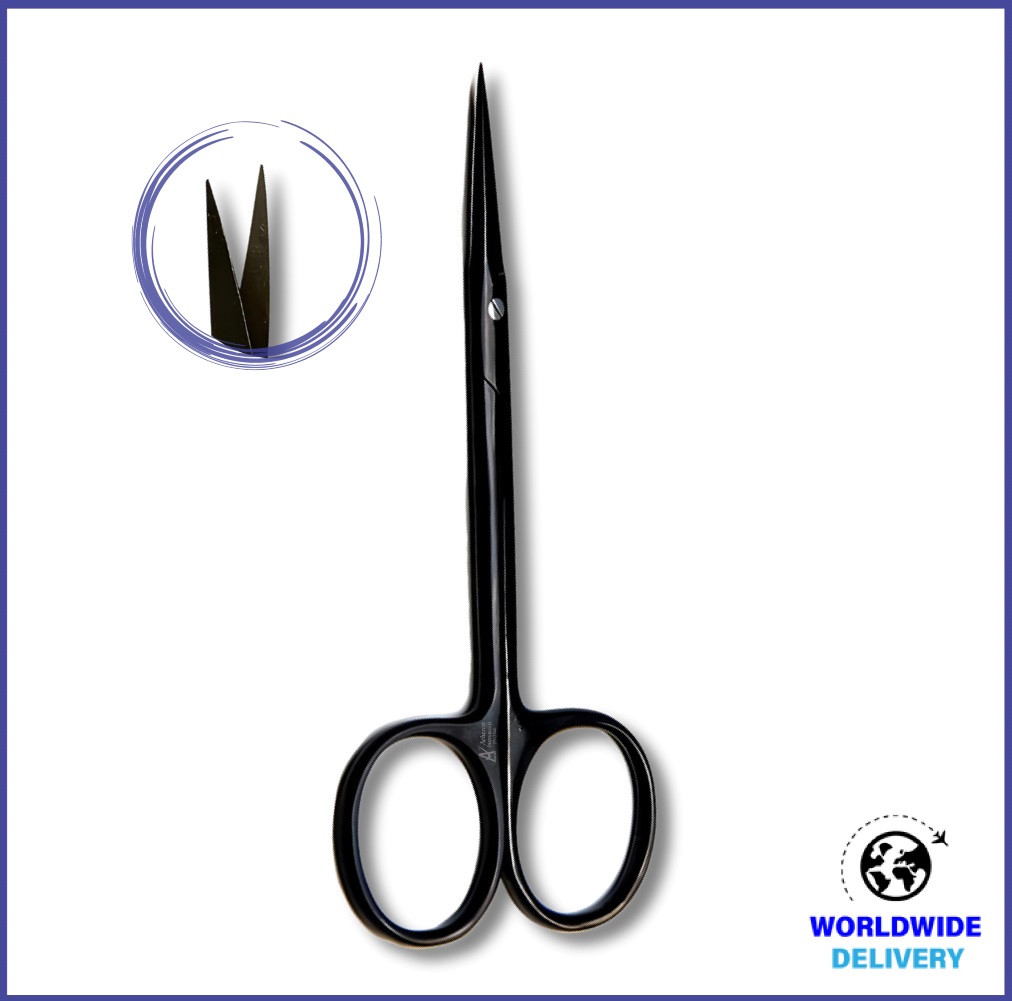
The Iris scissors are essential ophthalmic instruments designed with short blades and sharp, fine points used to cut, dissect, and manipulate delicate tissues. Medical professionals use this tool for cutting blood vessels, soft tissue, ocular membranes, muscle tissue, and sutures. The primary function of the Iris scissors is to provide microsurgical precision, enabling surgeons to perform detailed work in narrow or confined spaces. Furthermore, the iris scissors are also widely used in dermatology, emergency rooms, and for delicate procedures. The following are the features and characteristics of the iris scissors to help you understand their working mechanism.
- Fine, sharp tips to allow for precise cutting in small or confined areas.
- Short blade length to perform detailed dissection and suture trimming.
- Curved or straight blade profiles to cut in superficial and deep surfaces.
- Ergonomic ring handle to facilitate easy handling and control during surgery.
- Stainless steel construction to ensure durability and corrosion resistance.
Explore our wide range of ophthalmic instruments for precision surgeries.
How Iris Scissors Assist in Different Surgical Procedures
The high degree of precision offered by Iris scissors makes them an indispensable tool across multiple surgical specialties. Whether you are using the straight blades for direct surface cuts or the curved blades to navigate complex anatomical structures, these scissors adapt to a wide range of clinical demands. Below, we detail how Iris scissors support various medical fields and why they remain a fundamental instrument in modern surgical practice.
Ophthalmic Procedures
Iris scissors are primarily used in ophthalmic procedures for the precise cutting and manipulation of ocular tissues. They are ideal for performing iridectomy, capsulotomy, corneal incisions, suturing, and general anterior segment procedures. Moreover, straight blades are typically used for clean incisions in the cornea or superficial layers. In contrast, curved blades allow the surgeon to maneuver around the eye's natural globe, particularly when working directly on the iris or thin ocular membranes. The iris claw lens holding forceps and castroviejo micro scissor are essential tools to assist with ophthalmic surgeries.
-
Trimming and shaping the iris during iridectomy procedures.
-
Cutting fine, fragile ocular membranes with minimal tissue trauma.
-
Navigating the curved anatomy of the eye safely with curved-blade variants.
-
Executing precise corneal incisions using straight-blade configurations.
Micro-dissection Surgeries
In neurosurgery and vascular surgery, micro-dissection requires tools that can operate in highly confined, sensitive spaces. The small size of Iris scissors makes them ideal for isolating very small anatomical structures without causing collateral damage. They are primarily used for precise cutting and manipulation of thin membranes, vessels, and tissues.
-
Navigating tight surgical corridors in the brain or spinal column.
-
Isolating and freeing microscopic blood vessels from surrounding fascia.
-
Dissecting sensitive nerve sheaths with maximum precision.
-
Maintaining clear visibility of the surgical site due to the instrument's slim profile.
Dermatological Excision
Dermatologists use Iris scissors for precise excisions on the skin's surface. They are ideal for removing small skin lesions or cysts and for trimming delicate skin grafts. Because the sharp tips allow for the precise removal of fine epidermal layers, surgeons can ensure clean margins while preserving as much healthy tissue as possible.
-
Excising small moles, tags, or superficial cysts with clean margins.
-
Trimming the edges of delicate skin grafts to ensure a perfect fit.
-
Removing fine epidermal and dermal layers without crushing the tissue.
-
Providing superior control during minor outpatient skin procedures.
Plastic and Reconstructive Surgery
Iris scissors are crucial for the exact trimming and shaping of soft tissues, flaps, and grafts during plastic and reconstructive procedures. Surgeons rely heavily on the curved variants of these scissors to follow natural body contours and achieve symmetrical, visually pleasing results.
-
Contouring soft tissues and fat deposits for refined cosmetic results.
-
Trimming delicate tissue flaps to ensure seamless wound closure.
-
Utilizing curved blades to follow natural facial or body curves accurately.
-
Minimizing post-operative scarring through atraumatic tissue cutting.
Otolaryngology (ENT) Procedures
Otolaryngologists face unique challenges when operating in the confined, angular spaces of the ear, nose, and throat. ENT specialists use Iris scissors for precise cutting and dissection in these difficult-to-reach areas. Moreover, the curved blade configuration is particularly valuable here, allowing the surgeon to maneuver around anatomical corners and access hidden tissue beds that straight instruments cannot reach.
-
Navigating around complex angles within the nasal cavity or ear canal.
-
Excising delicate mucosal tissues without damaging adjacent structures.
-
Trimming fine cartilage during rhinoplasty or reconstructive airway surgeries.
-
Enhancing procedural efficiency in deeply recessed, narrow surgical fields.
Postmortem Examinations
While primarily used in live surgical settings, Iris scissors also play a critical role in pathology. Pathologists use these scissors during autopsies to perform highly detailed dissections of small organs and structures.
-
Extracting clean, crush-free tissue samples for accurate laboratory analysis.
-
Dissecting small, complex organ structures to determine the cause of death.
-
Navigating delicate vascular or neurological pathways during autopsies.
-
Providing pathologists with a reliable tool for intricate anatomical investigations.
Advantages of Using Iris Scissors
The following are the advantages of Iris scissors that make them a preferred choice among medical professionals.
- Minimizing Tissue Trauma: The sharp blades make clean cuts, reducing tissue crushing and promoting faster healing while lowering complications.
- Enhancing Surgical Precision: The small form factor and ergonomic design give the surgeon full control over cutting, vital for microscopic dissections.
- Increasing Operating Room Efficiency: Reliable, sharp instruments shorten procedure times by enabling smooth cuts and preventing delays caused by resistance.
- Providing Multi-Specialty Versatility: The adaptable scissors are used across many disciplines, making them a fundamental tool in medical facilities.
Where to Buy High-Quality Iris Scissors
Acheron Instruments is a leading manufacturer and supplier of premium surgical tools, including the Iris scissors. Similar to our other surgical instruments, these ophthalmic scissors are top-of-the-line and meet rigorous standards for quality, durability, and performance. Moreover, Acheron Instruments is US FDA Approved, EU MDR, ISO 13485, and CE compliant, ensuring the safety, performance, and ability of our surgical instruments to withstand repeated sterilization cycles. This means that when you choose to buy your eye scissors or any other tool from Acheron Instruments, you are investing in a product crafted with precision and built to last.
Ready to upgrade your ophthalmic scissors? Explore our selection of surgical scissors and tools at Acheron Instruments and experience the difference in precision, durability, and ergonomic comfort.
Conclusion
Iris scissors are a critical component of modern surgical instrumentation. Their design, featuring fine tips and sharp blades, provides the control needed to perform delicate tissue manipulation across various medical specialties. By understanding the tool's distinct features, applications, and maintenance requirements, medical professionals can ensure optimal performance during operations. At Acheron Instruments, our advanced iris scissors provide superior accuracy, ergonomic design, and lasting durability, ensuring each measurement promotes excellent patient outcomes. Visit our website to browse our product range or connect with us for more information.

-1790596974.jpg)